How To Build Your Self Esteem
Hope you're having a great week!
Did you know, research has shown that over 80% of people struggle with their self-esteem?
Maybe you can relate to experiencing feelings of low self-esteem now, or sometime in your life?
Self-esteem is a driving force behind our confidence, how we see and feel about ourselves, and encompasses our sense of value, significance, and self-worth.
Having a solid sense of self-esteem can positively impact and powerfully transform every area of your life – from your relationships to your career, from your health and well-being, to your fulfillment and levels of success.
That's why I'm eager to share my latest article: How To Build Self Esteem – A Guide to Realize your Hidden Power. I hope you find it helpful and insightful!
And wherever you are on your self-esteem journey, please remember this:
You are awesome.
You are deserving of love, happiness and success.
You are worthy.
You are imperfectly perfect.
It’s not by chance that you have arrived here, on this planet, at this very time.
You are not a mistake.
Even if you feel inadequate, unlovable or unworthy, know that you are none of those things.
You are enough!
You may not be able to believe this just yet, but some part of you, deep down inside knows this to be true.
Check out the article here to get insights and strategies to realize it for yourself.
Here’s to loving yourself and living a life you love!
P.S. If you haven't already, please connect with me on Linked-In and follow me on Instagram for your daily dose of inspiration, words of wisdom, helpful tips and positivity!

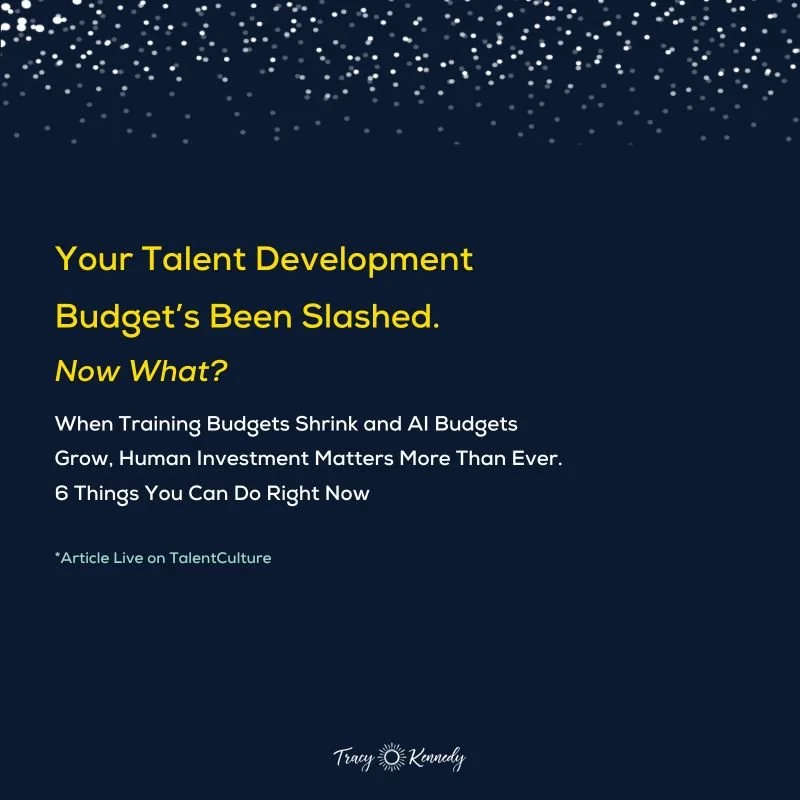
A trend is evident across organizations: budgets are tightening, and talent development is often one of the first areas to take a hit. As investment in AI climbs, budgets for training, leadership development, and teambuilding are decreasing.
It’s logical on paper. AI is the future. It promises speed, efficiency, scalability, and cost savings. Organizations are transforming to meet future demands, and AI investments are vital for long-term success.
However, there’s a risk quietly building beneath the surface: we’re optimizing organizations through AI while underinvesting in the humans doing the work. That’s a dangerous tradeoff.
What happens when we inadvertently deprioritize the growth, development, and human connection of the people managing these AI processes – and everything else that keeps organizations running smoothly? The unintended consequences may not show up on a dashboard, in OKRs or KPIs today or tomorrow. But they will. Disengagement, eroded trust, and talent loss often don’t announce themselves until it’s too late.
As budgets shift and AI investment accelerates, the real question isn’t: How much can AI replace? Instead, it’s How can we best-equip humans to succeed and thrive in an AI-powered workplace?
The answer is not to slow AI development, but to match it with an equal and continued commitment to the human-forward development of people.
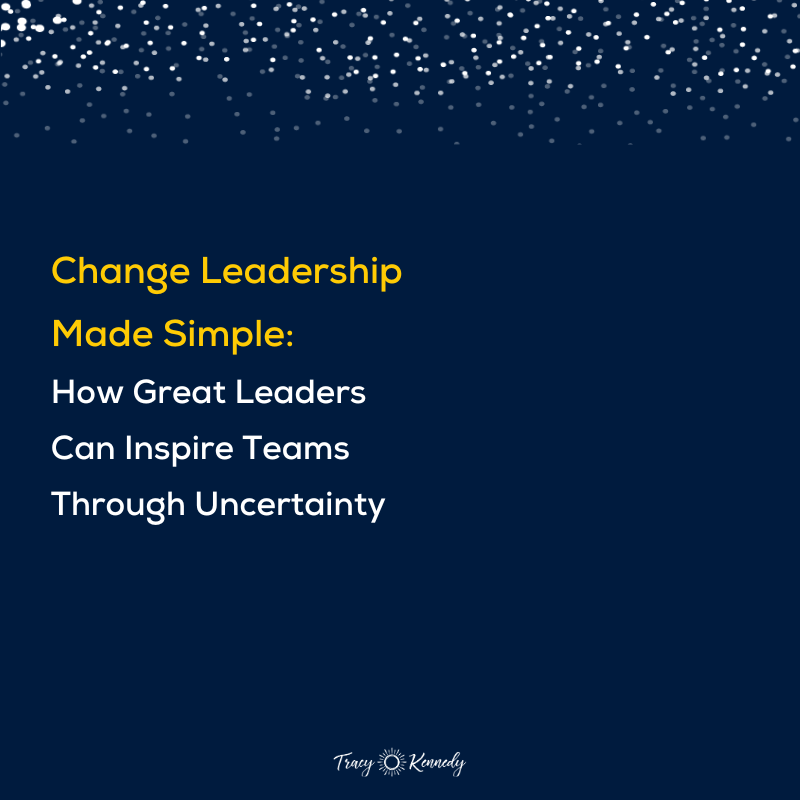
After years of coaching leaders through change - and navigating plenty myself - I’m excited to share my latest Forbes Coaches Council article:
Change Leadership Made Simple: How Great Leaders Can Inspire Teams Through Uncertainty.
Change is everywhere - at work and in life.
New initiatives. New strategies. New technologies. Shifts in leadership, roles, objectives. Career transitions, promotions, layoffs.
Sometimes we choose it. Sometimes it chooses us. But we’re all experiencing something new.

We all think we know ourselves. But do we really? In this article I wrote for TalentCulture, I discuss how leadership self-awareness isn’t about good intentions or taking one personality test—it’s about consistently understanding how your behavior affects others.
If you’re thinking, “I’ve done the work”, here’s the catch: you may think you know yourself. Odds are, you mostly do. But real self-awareness isn’t static. And the blind spots that held you back five years ago? They may still be showing up in subtler, more impactful ways.
When leaders fail to recognize that they might be the problem, their teams suffer—and so does business performance.

One of the more undervalued and less frequently discussed behaviors of great leaders is the ability to pause— to step back and stay calm under pressure. Pausing is a critical yet often overlooked skill that allows a leader to block out the noise, chaos, and competing opinions of others and identify the best way forward.
In this Forbes article, you’ll learn to master the power of the pause with one of my favorite leadership tools --- the AHA Method.
Where can you start using the power of the pause in your leadership and life?

Many of us have experienced the murky waters of a work culture gone wrong. In this article on Forbes, I unpack the signs—and impacts—of a toxic work environment and what to do if you find yourself there.

We all know that collaboration is critical, but many leaders struggle to harness it effectively. Leaders can't simply tell their team to “Be more collaborative!” They must dedicate time and intentionality to making it happen. This Forbes piece is chock-full of tips and strategies to get back to basics and effectively foster a collaborative environment.
Creating A Collaborative Workplace: Six Strategies That Actually Work

I was thrilled to be contacted by the team at Katie Couric Media to weigh in on a timely topic called, “Lucky Girl Syndrome.” I had a wonderful discussion with the reporter on the benefits of positive thinking, the downfalls of toxic positivity, and how “luck” plays a role in creating the lives of our dreams. We talked about the seductive and trendy nature of "manifesting" and the importance of "putting in the work".

Looking for ways to build your confidence? Check out this podcast and article to help you - and your kids -have the confidence to seize opportunities, take chances, embark on the next steps in your life or career, and live a life you love.

If you’re considering making a move or looking to develop your career further, this is a great time to take a step back, and reflect on what’s most important to you and what you want for your future. In this article, you’ll learn what’s going on with this seismic shift in careers, why it can be so hard to make a move, and five clear and simple steps to take if you’re ready to make a change.
“If you want something done, ask a busy person.”
I’ve watched that saying prove true again and again over nearly 30 years of coaching and consulting. The capable people get tapped for everything.
Can you lead the presentation? Train the new hire? Fix the project? Join one more committee? Of course you can. You’re reliable, experienced and willing to step in.
But just because you can do something doesn’t mean you should.
My latest Forbes article explores what I call the curse of competence: getting pulled into work because you’re good at it, not because it is the best use of your strengths, supports your growth or brings you joy.
If you feel like you’re the one carrying everything, I wrote this piece for you.
Inside, I share:
How to recognize when competence has quietly become obligation
The real cost to your energy, growth and joy
A simple YES filter to use before automatically agreeing
Graceful ways to say no, redirect an opportunity or make room on your plate
This isn’t about becoming less helpful or less generous. It’s about protecting your capacity for the work only you can do.
The goal isn’t to do less. It’s to stop giving your best work away so you can be brilliant at the work that fulfills you.